Showing posts with label May '70. Show all posts

July 2, 2015

Two Trips, To Kent State And To Jackson State, 45 Years On


This May I took it upon myself to attend two memorial observances, the 45th anniversaries of the massacres at Kent State and Jackson State.
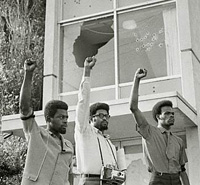
On May 4, 1970, four students were gunned down by the Ohio National Guard at Kent State University as part of a massive upsurge against the war and for social change that was sweeping American campuses. Ten days later on May 14, Mississippi state troopers and Jackson police opened fire on a student protest at Jackson State, killing two young men, James Earl Green and Phillip Gibbs, in a massive fusillade. These two shootings were critical points in the events of May ’70, the most massive and militant nation-wide student strike this country has ever seen. (I have written a series of pieces on May ’70, 19 of them and counting.)

Here are a few reflections based on what I observed. Please bear in mind that I had not been back to the battlefield at Kent since 1994, and this was my first trip to Jackson State.

1. I am goddamn old. I was an adult, a young one, when this shit happened, and that was going on half a century ago.

Nevertheless, like many who were around then, I am unlikely to forget these killings before I check out.

2. Amidst numerous moving and inspiring moments, I want to cite two that struck me particularly. The May 4 Visitors Center at Kent State, one of the most important victories won there in the long struggle against forgetting, has as its centerpiece a short film, 9 minutes perhaps, with many photographs and sound recordings of the deadly moments around the National Guard firing. I sat through it three times.  If you are ever within, say, a three hour drive, you should watch it.

At Jackson State, the then-president of the school, Dr. John A. Peoples, described the aftermath of the shooting. He told how for the next four years at every sporting event the school’s team played in, Jackson students greeted the national anthem by standing silently with their fists in the air, Tommie Smith & John Carlos-style. His pride was evident, as was his quiet delight when he described sitting next to the governor of Mississippi at one such game.

3. Kent is an amazing anomaly. For forty-five straight year people have made hajj to the campus from across the country, joining with a core of regulars associated with the university and the town of Kent to remember May 4, 1970. I cannot think of anything comparable in the left movement in this country. In New York there is an annual memorial for the victims of the Triangle Shirtwaist Fire. In Bay View, WI, now part of Milwaukee, the local labor movement remembers the 1886 murder of seven strikers by National Guardsmen at a steel mill. Both of these events are mainly local in character and both date in their current form to the revival of labor militancy and interest in the working class during the '60s and '70s.

Why is Kent so different? The most obvious thing is that it was white college kids who were shot, on their campus, by the National Guard. It stunned the country at the time, a time when hundreds of thousands of us were on strike at our own campuses. This was reinforced by the classic musical mnemonic, "Ohio" written by Neil Young and pushed into immediate release by Crosby, Stills, Nash & Young in the aftermath of the killings.

Further, the university administration did its best to obliterate all memory of the killings. This led in 1977 to Tent City, erected to block the construction of a gymnasium on the murder site, and to a decades-long campaign of militant struggle rejecting further attempts to kill or to coopt and dilute the memory.

Nowadays, May 4 is observed by several days of talks, forums, and culture. One I attended was run by young members of Black United Students, whose powerful panel and heartbreaking stories laid bare how little has actually changed since their predecessors were organizing and protesting racism and discrimination at Kent in 1970.

The heart of the observance is memorial rituals now enshrined by time: a candlelight march as May 3 turns into May 4, this year numbering 335, followed by a vigil in which volunteers take rotating shifts holding candles at the now-memorialized spots where the four fell. (I stood for Jeffrey Miller and Sandy Scheuer at different points during the night). It culminates with an emotional memorial program.

While folks come from around the country to take part, the commemoration is centered on Kent people. In addition to nationally recognized spokespeople like my old compa Alan Canfora and Tom Grace, there is a core of people residing in Kent who do the invisible work that makes it happen. Here I will single out as representative the folk I stayed with there, Mike Pacifico and Kendra Hicks Pacifico, whose basement is a well-organized stash of decades worth of banners, candles and other nuts and bolts of the protest. And the ongoing student group, the May 4 Task Force, provides not just bodies but leadership.

The whole comprises what old hands call the Kent May 4 Family. And in multiple ways it is a family. First, relatives of the fallen have been part of it from the start. Most of the parents, active from the start, are now dead or are unable to attend. Laurel Krause, Alison’s sister, is always a presence. So is Alan Canfora’s sister, Chick, another Kent alum. Beyond that, family members of longtime participants who have been brought to Kent since they were itty-bitties have now come on their own. And new regulars are adopted, like Canadian photographer Christian Bobak who came to document the anniversary five years ago and has returned every year since.

4. At Jackson State this year, a short memorial program was followed by a panel with vigorous participation from veterans of May, 1970 in the audience. Apparently, annual programs had fallen by the wayside in some past years but with the rise of the Black Lives Matter movement focused first and foremost on police killings of young Black men, this year’s program had to happen.

Where the observation at Kent State University was overwhelmingly white, the 110 or so at Jackson State were at least that Black. Participation was even older than at Kent. The two activists in their twenties who drove me down from Memphis were among the youngest people there, save for a few in strollers.

The formal program was attended by about blessedly short given the outdoor heat and lack of shade. Bjorn, one of the Tennesseans I traveled with, summed it up as highlighting students from 1970 who had gone on to academic or professional success, and marked by frequent references to the events of May 15 as “a tragedy.” Jackson’s new Chief of Police, a younger alum, had to say he knows what people are thinking about police these days and why, and pledged that there would be no such occurrences on his watch.

Maybe 50 people stayed for the forum after, and folks there were plenty clear. What happened in May 15, 1970 was not “tragic," it was murder. Murder by the police. It was fascinating to watch the veterans share their experiences and try and pull together what they had seen into a larger, more coherent picture of the deadly assault they had survived. Comparisons to the present murders of young African-Americans were blunt and frequent. And I wish every white yahoo who responds to police violence by going on about Black-on-Black violence could have been there to listen to folks from the community grapple with the problem.

(Both halves of the program were livestreamed by Jackson State; video can be viewed here.)

5. LONG LIVE THE SPIRIT OF KENT AND JACKSON STATE! was the slogan that resonated through the student movement in the 70’s and 80’s. Folks that were active in 1970 will, to this day, automatically respond to mention of Kent State by saying “and Jackson State.” Thus, the struggle for memory, and against the tendency of the fiercest of people’s battles to be crammed down the Great American Memory Hole, has also helped keep the memory of the Jackson killings alive far beyond the borders of the campus itself.

Activists in the May 4 movement at Kent have always worked to maintain ties with Jackson State. For years until his untimely death earlier this decade, Gene Young represented Jackson at Kent State every year and was a cherished figure in the community there.

Still, the greater attention to Kent in memory and in history as it is taught and written in this white supremacist country is obvious. It clearly rankles many of the veterans at Jackson State. Several made a point of complaining that the protest at Jackson is too often described as an anti-war protest and not primarily as a protest against the multi-faceted racism directed at Black students in the capital of Mississippi in 1970.

6. It is only natural that the focus on Kent (and, always, Jackson) in the May 4 commemorations carries with it a certain built-in narrowness. While the killings at Kent kicked the national student strike into overdrive, it was already the largest and most powerful student protest in the history of the country.

The thing about Kent is that the administration closed the campus up tight on the afternoon of May 4 and ordered everyone to leave. From the standpoint of Kent, the May '70 story pretty much ends here, but those of us who were around during that fateful month know this was only part of the story. The truncation of the narrative can be seen clearly in the May 4 Visitor’s Center. The Kent-centrism is reflected in the three parts of the museum. The build-up section presents a broad picture of the 60’s and the tectonic shifts in politics, society and culture that that gave rise to the earthquake that was May 1970. The central section is the film about the events of that day. The third part is heavily focused on various responses to the Kent killings, with some attention to Jackson State.

The fact that the movement went on to greater heights, more militant battles, and striking accomplishments is absent. I spoke with two paid staffers, neither of whom knew about the police killings of six young Black men in Augusta, Georgia between the shootings in Kent and Jackson, or about the “hard hat riots,” savage attacks on protestors by union construction workers, organized in conjunction with President Nixon’s White House.

This is baked into the long struggle at Kent and it is not the particular responsibility of activists there to correct it. That falls rather to veterans of all the battles of May 1970: step up, dredge up the memories and spread the lessons, as folks have been doing at Kent and Jackson all these years.

7. There were some intriguing parallels at the two events.

Both sets of May 1970 veterans emphasized the organized nature of the murderous attacks—at Kent, the National Guard unit wheeling, kneeling and firing in unison into the unarmed students, and at Jackson the way the po-po marched in order up Lynch Street before turning to fire on the students.

Similarly, some people at both campuses seem driven to deny that the burning of the ROTC buildings there were the work of campus protesters. At Kent, the conspiracy-minded attribute not only the May 2 fire but also the cutting of firehoses to prevent it being extinguished to the work of provocateurs directed by the feds. At Jackson, the tendency is to blame vandalism by “the corner boys,” young Black men who hung out in the neighborhood of the campus. Well, maybe. But let’s not forget that 30 ROTC buildings developed problems which compromised their structural integrity, shall we say, during the first week of May 1970. Thirty. I know for a fact that some were not the work of provocateurs or “outside elements.”

We have two books to look forward to, both headed for publication. Tom Grace, wounded on May 4 and now a professor in Buffalo, will add his analysis to the considerable body of works on Kent State. The absence of a comparable shelf full of books dealing with Jackson State is to be improved by Dr. Nancy Bristow of the University of Puget Sound, who is finalizing a definitive study.

Best of all is a little script flip. At Jackson State, a white prof, Dr. Robert Luckett of the History Department, evidently played an important role in organizing the program. At Kent the faculty adviser of the student May 4 Task Force for more than a decade is a lecturer in the Department of Pan-African Studies, Idris Kabir Syed, who also acts as adviser to Black United Students there. Sweet, hunh?

8. Finally, I want to issue a challenge to the Kent State May 4 Family and to others, old school veterans and new activists alike, who hold the memory of the events of May ’70 in their hearts. A Venn diagram of the attendees at the Kent and Jackson observations this year would show the circles intersecting at one point. Me. That ain’t right. If there is a 46th anniversary celebration at Jackson State next year, I hope you will join me there.

Read more!

May 10, 2010

Gotta Make Way For The Young Folks…

As we recall the campus upsurge of May 1970, and the student movement and youth rebellion it gave rise to, it's equally important to recognize how much of today's struggle is youth-driven. We've covered the fight over public education that began on the west coast and became a nationwide battle on March 4th with NJ efforts in March 4: Young teachers lead the fight in Newark, NJ, Young Teachers Lead The Way In Newark (part two), and Spring 1970 Student Upsurge — Spring 2010 High School Walkouts …Not so different. And the battle over Newark's water supply (reported on here as Black NJ: The community fights "Hollywood Booker over right to water… Newark Wins!) was largely driven by the young folk.
It is important to grasp how many of today's battles are youth-driven, so People's Organization for Progress friend and WBAI radio activist Lisa Davis provides us with a multimedia presentation, POP Tribute to the Youth in the Struggle, that highlights the role of young people. "Better Make Way for the Young Folks," popularized by the Jackson 5 and The Supremes, is the background music…
(please view it at the link above)

Read more!

May 9, 2010

May' 70: 10. The Peace Crawl & The Handwriting On The Wall

Forty years ago today, 100,000 angry people descended on Washington for a mass march to end the war.

Preceding years had seen larger marches, to be sure, pushing toward a million strong on occasion, like April 1967 in NYC. But this one had been called only a week before, in response to the Cambodia invasion. Normally these exercises took months and months to pull together—getting the permits, choosing the slogans, printing the literature, spreading the word, renting the buses, mobilizing local groups to take part. And let’s not forget fighting over who should speak on the program.

I didn’t go to DC that Saturday. The NYU Uptown SDS chapter didn’t go, Nobody I was in touch with from the Washington Square Campus did either, if I recall correctly. Relatively few of the revolutionaries and other activists at the core of the campus upsurge on the East Coast did.

Partly, we had simply tired of Peace Crawls, as we had uncharitably taken to calling them. Starting in 1965, there had been two Big Marches a year, one in the spring and one in the fall, usually in either DC or NYC (and simultaneously in the Bay Area or L.A. or both). Sometimes, as with the March on the Pentagon, they marked a big step forward for the movement, usually because they took some unexpected action. More often they demonstrated that an awful lot of people wanted the war over with, most ricky–tick, and served as a reminder that it didn’t seem to be happening.


More particularly, we felt that it was a diversion right then. The unprecedented upsurge which we were in the midst of had been built on hundreds of campuses around the country and that was where the fight was going on. It would be pointless and potentially harmful to pullpeople away from those battlegrounds for a time-consuming roundtrip to a big city many hours or even days away.

In this case, there were countless discussions and debates in small groups, informal collectives, mass strike committees over what to do. Again, to belabor a point made earlier, there was no organized and recognized center to the movement. Had there been one, it might have put out a call that would have meant half a million plus in DC--or 25,000.

The powers that be were, it turns out, plenty scared of that Washington march. This was the stretch in which elements of the 82nd Airborne were moved into the basement of the executive office building and other potential occupation targets. I would still argue that throwing a scare into the bastards wasn’t enough to justify pulling forces away from the campus base areas that had been established. (After all, we had already frightened the shit out of them in November, 1969, when a 10,000 strong militant breakaway from the Big March had laid siege to the Justice Department, causing the Attorney General’s wife --Martha Mitchell, for those with long memories--who had been peering down from the top floor, to exclaim, “It looked like the Russian Revolution!”)

Meanwhile, the strike was about to win—or start folding up, depending on how you looked at it.

By that weekend, the outlines of the enemy’s overall strategy to deal with the flood of protest on the campuses was taking shape. University administrations around the country, a few at first, but with many more watching from the wings, started taking a stance of solidarity with the protesting students and faculty!

More specifically what they did was issue a proclamation with some variation of this message:

You splendid young people are correct. This crisis is no time for business as usual. We are therefore canceling all classes for the duration of the Spring semester. We urgently hope you will pursue the kind of change this country so obviously needs by, oh, for instance, going back to your hometowns to build opposition to the war and support for social justice.

Oh, yeah, no finals. Everybody gets a pass for all course work.

And the dorms are closing.

Mao Zedong’s famous dictum is that the guerrilla is like a fish swimming in the sea of the people. Well, for the activists, the campuses were our sea, and they were being drained a month ahead of schedule.

We had pulled it off. A national student strike, the dream of campus activists since the early ‘60s, was shutting down the bulk of the American higher education system.

So what?

Now what?

Well, we still had the wind at our backs, and the coming weeks would see further gains won, but those two questions would loom larger as we kept building the struggle.


Click here to read this series from the beginning.

Click here http://firemtn.blogspot.com/2011/05/may-70-8-forgotten-dead-of-augusta.htmlto read the next installment.

Read more!

May 1, 2010

May ‘70: 3. May Day & Bobby Seale

Me, I don’t have much memory of Nixon’s April 30, 1970 speech announcing the invasion of Cambodia. It could have been because nothing the bastard did would have surprised me by that point, but more likely it’s just that I was already on my way to New Haven to see about Bobby.

That would be Bobby Seale, chairman of the Black Panther Party, who was facing trial in the case of some Connecticut Panthers accused of murdering a member they thought was a police informant. A national call had gone out for a May Day demonstration to defend Bobby, and thousands of young radicals from around the country and especially the Northeast were en route. We had a couple of dozen from NYU’s Uptown campus with us.

Lemme step back here to set a little context. NYU today is a bigtime, self-promoting academic powerhouse whose relentless pursuit of lower Manhattan real estate for expansion has earned them the hatred of all clear-thinking New Yorkers. Back then, NYU was a bit cheesier, with a campus in Greenwich Village and a satellite one in the Bronx. (The Uptown campus was abandoned by the racist NYU administration later in the 1970s when it found the West Bronx was becoming, let’s say, too colorful, and is now the home of Bronx Community College).

We had a pretty good SDS chapter at NYU Uptown and saw no reason to change anything just because the national organization had imploded the previous summer. (In fact, at one point we decided the chapter head, Lon E. Thud, must be National Secretary of SDS—nobody else was doing it, after all). NYU had given me a “compulsory leave of absence for academic reasons” at the endof the previous school year, a tactical mistake on their part. I was still a registered student and, as such, could not be excluded from the campus.

We began the school year with an orientation week packet and program we had put a lot of time into prepping and followed up with extensive dorm canvassing, picking up some fine new members. One of our fall activities was selling the Black Panther, the BPP’s weekly paper, to build support for the revolutionary group—a dynamic model of revolutionary organization, hugely popular in the Black community and under concerted and deadly attack by local police forces and J. Edgar Hoover’s FBI.

In the early months, we could barely sell a dozen papers. The problem wasn’t their militant program or their guns. We were meeting particular resistance on a disproportionately Jewish campus. “Aren’t they anti-Semitic?” folks would ask, citing the BPP’s early support of the Palestinian struggle and Fatah.

But patient education and organizing would combine with the increasing radicalization of the times to create a more favorable climate. By mid-winter SDS took a contingent of over 100 from the Uptown campus to join a march from Manhattan to the Queens House of Detention in support of the Panther 21 (more political prisoners, victims of frame-up charges, whose long court case and trial, the most expensive in NY history, eventually resulted in complete exoneration).

When the call came to rally on May Day in New Haven to Free Bobby! (a slogan which had somehow mysteriously appeared writ large across various Uptown campus buildings), a couple dozen of the most active radicals at the school headed up there, to join 15,000 other protesters crashing in Yale dorms and rallying on the New Haven Green.

Friday, May 1 was a very tense day, which foreshadowed the month to come in its combination of repression and concession. The governor had persuaded Nixon’s Attorney General, John Mitchell, to airlift 4,000 Army paratroops and Marines from Fort Bragg and Camp Lejeune for deployment in New Haven! Meanwhile, Connecticut National Guard troops in APCs and tanks were stationed around the city.

At the same time Yale University head Kingman Brewster, facing a substantial groundswell of support for Seale within his elite student body, famously set himself against the establishment, declaring at a mass faculty meeting, to the horror of many alumni:

“I personally want to say that I am appalled and ashamed that things should have come to such a pass in this country that I am skeptical of the ability of Black revolutionaries to achieve a fair trial anywhere in the United States."
Significantly, that faculty meeting was dealing with the threat of a student strike at Yale, endorsed at a 1500 student rally where a Panther spokesman declared “That Panther and that Bulldog gonna move together!" In a pre-emptive strike, the profs voted to suspend business as usual. Faculty members didn’t have to hold classes, and no students would be penalized academically for not attending.

Finally, Brewster had decided to open the campus to the protestors, so as to avoid making Yale an easy target for us. Meanwhile, he negotiated with established organizers and leaders from New Haven’s Black community and the upstart Panther chapter there to ensure that dangerous violence wouldn’t break out. Even New Haven’s police chief fought for authority over the military contingent, and they were kept out of sight for the most part.

It was still a close thing on May Day. The afternoon rally was, as rallies tend to be, peaceful and long and boring, even with the occasional whiff of tear gas. In the evening, there were running skirmishes in the campus area, some clearly the work of provocateurs, and tear gas aplenty. We were ready to rumble, but the tactical and political leadership, headed by the Panthers, directed us to keep things cool. New Haven didn’t blow.

Nothing I’ve read mentions the most important thing to come out of the rally. We voted to respond to Nixon’s Cambodia invasion with a national student strike (which, though we didn’t yet grasp it, was already underway). And we laid out three main demands for the strike:

US Out Of Southeast Asia

End Campus Complicity With The War Machine

Free Bobby Seale & All Political Prisoners


With no widely-recognized national student organization to provide direction to the forces already set in motion, this call did a lot to lay down the political terms on which the events of May ’70 would take place. Campus after campus took the three demands up. Indeed, they were just what the doctor ordered—very broad, revolutionary in fact, but still specific, and representing mass sentiment among a whole layer in every part of the country and every section of the people, millions who had been thrown into motion by the ferment of the ‘60s.

Click here to read this series from the beginning.

Click here to read the next installment.

Read more!

April 30, 2010

May ’70: 2. Nixon Kicks It Off!

I want to continue this review of May, 1970 with a deeper look at Richard Nixon’s speech, broadcast 40 years ago tonight. It was that speech, announcing that US troops were invading Cambodia, which triggered the eruption of protest that was May 1970. Actually, you could say Tricky Dick predicted it:

My fellow Americans, we live in an age of anarchy, both abroad and at home. We see mindless attacks on all the great institutions which have been created by free civilizations in the last 500 years. Even here in the United States, great universities are being systematically destroyed.
The US High Command had known since 1967 that the Vietnam War was unwinnable, as the leaked Pentagon Papers later showed. Nixon had been elected in 1968 with the promise that "new leadership will end the war" and giving wink-and-nod no-comment replies to reports he had a "secret plan” to do so.

What he gave us in the first year of his administration was Vietnamization, the idea that troops of the puppet Republic of Viet Nam (South Vietnam) could be quickly drafted (all males between 17 and 43 were subject to call-up), trained and armed to “defend their country” and large scale withdrawals of US troops would begin. [Stop me if any of this reminds you of US policies of, shall we say, more recent vintage.]

Meanwhile, in secret, US B-52s were carrying out insanely massive high-altitude bombing raids on neighboring Laos and Cambodia in an effort to disrupt supply lines from North Vietnam to the South. Early in 1970, a US-backed coup deposed Cambodia’s neutralist monarch, Prince Sihanouk and replaced him with a sketchy pro-US general, Lon Nol. This was followed by an even more intensive and deadly secret Air Force carpet bombing of large sections of the Cambodian countryside.

Nixon on April 20, 1970 had announced that he would be withdrawing 150,000 US troops in the next year, around 40% of the force then “in country,” a necessary sop to public opinion which was turning against the war. Ten days later came this attack in violation of international law and borders. It was, Nixon claimed, a limited incursion intended to disrupt or destroy a secret Vietnamese command base just over the border.

Nixon explained to a skeptical public that he was expanding the war to end it:
A majority of the American people, a majority of you listening to me, are for the withdrawal of our forces from Vietnam. The action I have taken tonight is indispensable for the continuing success of that withdrawal program.

A majority of the American people want to end this war rather than to have it drag on interminably. The action I have taken tonight will serve that purpose.

A majority of the American people want to keep the casualties of our brave men in Vietnam at an absolute minimum. The action I take tonight is essential if we are to accomplish that goal.
Well, we certainly wanted the war ended and the troops home. But after years of having been lied to about lights at the end of the tunnel, about crucial campaigns that would change everything, about the improved combat capacity of the puppet ARVN troops, about the evil "North Vietnamese" (fighting to liberate and unite their country) we sure as hell didn’t believe a word of this.

And when Nixon raised the specter of global anarchy and the destruction of 500 years of Western Civilization, it was us as much as the Vietnamese liberation forces he was talking about.

Because May 1970 didn’t erupt from a vacuum. For two years, reading the New York Times had been a positive treat. It seemed like every day there was a report on a student protest somewhere. “Hey, the kids at the University of East Dakota at Pumpkin Squat just took over the administration building! I didn’t even know they existed.”

One immediate example: In the week before Nixon’s speech, my friend Steve reminds me, the student affairs building, a center for student activism at the Lawrence campus of the University of Kansas, was mysteriously burned to the ground. This was the culmination of a month that saw a campus strike, a call by the Black Student Union for members to arm themselves against racist threats, a lot of arson, and ongoing small scale clashes in the streets between freaks and right wing locals. The days that followed the fire featured a 7 PM curfew, ordered by the governor, and repeated skirmishes between students and cops, including street barricades and sniping. (Later that summer Lawrence cops would kill Black activist Tiger Dowdell and an unarmed 18-year-old white student, Nick Rice, shooting both in the back of the head.)

And Lawrence wasn’t even a notably radical campus.

[Next time, it’s personal: Bobby Seale and May Day in New Haven]


Click here for the start of the series.

Click here for the next segment.

Read more!