Showing posts with label Kent State. Show all posts

July 2, 2015

Two Trips, To Kent State And To Jackson State, 45 Years On


This May I took it upon myself to attend two memorial observances, the 45th anniversaries of the massacres at Kent State and Jackson State.
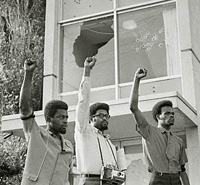
On May 4, 1970, four students were gunned down by the Ohio National Guard at Kent State University as part of a massive upsurge against the war and for social change that was sweeping American campuses. Ten days later on May 14, Mississippi state troopers and Jackson police opened fire on a student protest at Jackson State, killing two young men, James Earl Green and Phillip Gibbs, in a massive fusillade. These two shootings were critical points in the events of May ’70, the most massive and militant nation-wide student strike this country has ever seen. (I have written a series of pieces on May ’70, 19 of them and counting.)

Here are a few reflections based on what I observed. Please bear in mind that I had not been back to the battlefield at Kent since 1994, and this was my first trip to Jackson State.

1. I am goddamn old. I was an adult, a young one, when this shit happened, and that was going on half a century ago.

Nevertheless, like many who were around then, I am unlikely to forget these killings before I check out.

2. Amidst numerous moving and inspiring moments, I want to cite two that struck me particularly. The May 4 Visitors Center at Kent State, one of the most important victories won there in the long struggle against forgetting, has as its centerpiece a short film, 9 minutes perhaps, with many photographs and sound recordings of the deadly moments around the National Guard firing. I sat through it three times.  If you are ever within, say, a three hour drive, you should watch it.

At Jackson State, the then-president of the school, Dr. John A. Peoples, described the aftermath of the shooting. He told how for the next four years at every sporting event the school’s team played in, Jackson students greeted the national anthem by standing silently with their fists in the air, Tommie Smith & John Carlos-style. His pride was evident, as was his quiet delight when he described sitting next to the governor of Mississippi at one such game.

3. Kent is an amazing anomaly. For forty-five straight year people have made hajj to the campus from across the country, joining with a core of regulars associated with the university and the town of Kent to remember May 4, 1970. I cannot think of anything comparable in the left movement in this country. In New York there is an annual memorial for the victims of the Triangle Shirtwaist Fire. In Bay View, WI, now part of Milwaukee, the local labor movement remembers the 1886 murder of seven strikers by National Guardsmen at a steel mill. Both of these events are mainly local in character and both date in their current form to the revival of labor militancy and interest in the working class during the '60s and '70s.

Why is Kent so different? The most obvious thing is that it was white college kids who were shot, on their campus, by the National Guard. It stunned the country at the time, a time when hundreds of thousands of us were on strike at our own campuses. This was reinforced by the classic musical mnemonic, "Ohio" written by Neil Young and pushed into immediate release by Crosby, Stills, Nash & Young in the aftermath of the killings.

Further, the university administration did its best to obliterate all memory of the killings. This led in 1977 to Tent City, erected to block the construction of a gymnasium on the murder site, and to a decades-long campaign of militant struggle rejecting further attempts to kill or to coopt and dilute the memory.

Nowadays, May 4 is observed by several days of talks, forums, and culture. One I attended was run by young members of Black United Students, whose powerful panel and heartbreaking stories laid bare how little has actually changed since their predecessors were organizing and protesting racism and discrimination at Kent in 1970.

The heart of the observance is memorial rituals now enshrined by time: a candlelight march as May 3 turns into May 4, this year numbering 335, followed by a vigil in which volunteers take rotating shifts holding candles at the now-memorialized spots where the four fell. (I stood for Jeffrey Miller and Sandy Scheuer at different points during the night). It culminates with an emotional memorial program.

While folks come from around the country to take part, the commemoration is centered on Kent people. In addition to nationally recognized spokespeople like my old compa Alan Canfora and Tom Grace, there is a core of people residing in Kent who do the invisible work that makes it happen. Here I will single out as representative the folk I stayed with there, Mike Pacifico and Kendra Hicks Pacifico, whose basement is a well-organized stash of decades worth of banners, candles and other nuts and bolts of the protest. And the ongoing student group, the May 4 Task Force, provides not just bodies but leadership.

The whole comprises what old hands call the Kent May 4 Family. And in multiple ways it is a family. First, relatives of the fallen have been part of it from the start. Most of the parents, active from the start, are now dead or are unable to attend. Laurel Krause, Alison’s sister, is always a presence. So is Alan Canfora’s sister, Chick, another Kent alum. Beyond that, family members of longtime participants who have been brought to Kent since they were itty-bitties have now come on their own. And new regulars are adopted, like Canadian photographer Christian Bobak who came to document the anniversary five years ago and has returned every year since.

4. At Jackson State this year, a short memorial program was followed by a panel with vigorous participation from veterans of May, 1970 in the audience. Apparently, annual programs had fallen by the wayside in some past years but with the rise of the Black Lives Matter movement focused first and foremost on police killings of young Black men, this year’s program had to happen.

Where the observation at Kent State University was overwhelmingly white, the 110 or so at Jackson State were at least that Black. Participation was even older than at Kent. The two activists in their twenties who drove me down from Memphis were among the youngest people there, save for a few in strollers.

The formal program was attended by about blessedly short given the outdoor heat and lack of shade. Bjorn, one of the Tennesseans I traveled with, summed it up as highlighting students from 1970 who had gone on to academic or professional success, and marked by frequent references to the events of May 15 as “a tragedy.” Jackson’s new Chief of Police, a younger alum, had to say he knows what people are thinking about police these days and why, and pledged that there would be no such occurrences on his watch.

Maybe 50 people stayed for the forum after, and folks there were plenty clear. What happened in May 15, 1970 was not “tragic," it was murder. Murder by the police. It was fascinating to watch the veterans share their experiences and try and pull together what they had seen into a larger, more coherent picture of the deadly assault they had survived. Comparisons to the present murders of young African-Americans were blunt and frequent. And I wish every white yahoo who responds to police violence by going on about Black-on-Black violence could have been there to listen to folks from the community grapple with the problem.

(Both halves of the program were livestreamed by Jackson State; video can be viewed here.)

5. LONG LIVE THE SPIRIT OF KENT AND JACKSON STATE! was the slogan that resonated through the student movement in the 70’s and 80’s. Folks that were active in 1970 will, to this day, automatically respond to mention of Kent State by saying “and Jackson State.” Thus, the struggle for memory, and against the tendency of the fiercest of people’s battles to be crammed down the Great American Memory Hole, has also helped keep the memory of the Jackson killings alive far beyond the borders of the campus itself.

Activists in the May 4 movement at Kent have always worked to maintain ties with Jackson State. For years until his untimely death earlier this decade, Gene Young represented Jackson at Kent State every year and was a cherished figure in the community there.

Still, the greater attention to Kent in memory and in history as it is taught and written in this white supremacist country is obvious. It clearly rankles many of the veterans at Jackson State. Several made a point of complaining that the protest at Jackson is too often described as an anti-war protest and not primarily as a protest against the multi-faceted racism directed at Black students in the capital of Mississippi in 1970.

6. It is only natural that the focus on Kent (and, always, Jackson) in the May 4 commemorations carries with it a certain built-in narrowness. While the killings at Kent kicked the national student strike into overdrive, it was already the largest and most powerful student protest in the history of the country.

The thing about Kent is that the administration closed the campus up tight on the afternoon of May 4 and ordered everyone to leave. From the standpoint of Kent, the May '70 story pretty much ends here, but those of us who were around during that fateful month know this was only part of the story. The truncation of the narrative can be seen clearly in the May 4 Visitor’s Center. The Kent-centrism is reflected in the three parts of the museum. The build-up section presents a broad picture of the 60’s and the tectonic shifts in politics, society and culture that that gave rise to the earthquake that was May 1970. The central section is the film about the events of that day. The third part is heavily focused on various responses to the Kent killings, with some attention to Jackson State.

The fact that the movement went on to greater heights, more militant battles, and striking accomplishments is absent. I spoke with two paid staffers, neither of whom knew about the police killings of six young Black men in Augusta, Georgia between the shootings in Kent and Jackson, or about the “hard hat riots,” savage attacks on protestors by union construction workers, organized in conjunction with President Nixon’s White House.

This is baked into the long struggle at Kent and it is not the particular responsibility of activists there to correct it. That falls rather to veterans of all the battles of May 1970: step up, dredge up the memories and spread the lessons, as folks have been doing at Kent and Jackson all these years.

7. There were some intriguing parallels at the two events.

Both sets of May 1970 veterans emphasized the organized nature of the murderous attacks—at Kent, the National Guard unit wheeling, kneeling and firing in unison into the unarmed students, and at Jackson the way the po-po marched in order up Lynch Street before turning to fire on the students.

Similarly, some people at both campuses seem driven to deny that the burning of the ROTC buildings there were the work of campus protesters. At Kent, the conspiracy-minded attribute not only the May 2 fire but also the cutting of firehoses to prevent it being extinguished to the work of provocateurs directed by the feds. At Jackson, the tendency is to blame vandalism by “the corner boys,” young Black men who hung out in the neighborhood of the campus. Well, maybe. But let’s not forget that 30 ROTC buildings developed problems which compromised their structural integrity, shall we say, during the first week of May 1970. Thirty. I know for a fact that some were not the work of provocateurs or “outside elements.”

We have two books to look forward to, both headed for publication. Tom Grace, wounded on May 4 and now a professor in Buffalo, will add his analysis to the considerable body of works on Kent State. The absence of a comparable shelf full of books dealing with Jackson State is to be improved by Dr. Nancy Bristow of the University of Puget Sound, who is finalizing a definitive study.

Best of all is a little script flip. At Jackson State, a white prof, Dr. Robert Luckett of the History Department, evidently played an important role in organizing the program. At Kent the faculty adviser of the student May 4 Task Force for more than a decade is a lecturer in the Department of Pan-African Studies, Idris Kabir Syed, who also acts as adviser to Black United Students there. Sweet, hunh?

8. Finally, I want to issue a challenge to the Kent State May 4 Family and to others, old school veterans and new activists alike, who hold the memory of the events of May ’70 in their hearts. A Venn diagram of the attendees at the Kent and Jackson observations this year would show the circles intersecting at one point. Me. That ain’t right. If there is a 46th anniversary celebration at Jackson State next year, I hope you will join me there.

Read more!

May 18, 2011

May '70: 12. The Forgotten Dead Of Augusta [Updated]

There were six of them, gunned down by the armed force of the state.

I could be talking about the four students murdered at Kent State just seven days before plus the two who would would die later in the week at Jackson State.

But I’m not. I’m talking about six Black men killed in Augusta, Georgia, 41 years ago this week. Each was shot in the back by police shotguns, and their deaths were woven into the fabric of struggle and repression that was growing day by day in May, 1970.

Like many an urban rebellion in the ‘60s, it started with the cops. On May 9, Charles Oatman died in the Augusta city jail. He was 16 and mentally disabled. The police announced that he had died in a fall from his bunk. At the funeral home, his body was discovered to have fresh cigarette burns and bruises all over it. Open wounds from a whipping marred the corpse’s back. His skull was caved in. Changing their tune, the cops moved to charge his cellmates with murder.

On May 11, community activists who had been dealing with police brutality issues for a long time met with officials and left the meeting to find 500 furious community residents outside demanding action. A march was called on the spot and soon erupted into rock throwing and looting which went on into the evening.

The governor of Georgia, a foam-flecked racist named Lester Maddox, swung into action. He ordered out the state police to deal with the citizens he called “communists” and Black Panthers. He gave the cops orders to shoot to kill and even to raze “any building they’re in to its very foundation if necessary to get them out.” Maddox followed up by mobilizing 1,200 troops of the Georgia National Guard, who reached Augusta about 1:00 in the morning on the 12th.

By dawn on the 12th, the “Augusta riot” was over and over 80 people were wounded. Six Black men were dead. Most were young. None had been armed. All were hit in the back by shotgun blasts consistent with police riot guns.

Why do these ugly police murders belong in a series of articles about the campus uprising of 1970? To us at the time, it was obvious. These kids were murdered just like the kids at Kent State. Augusta was, in fact, one of the last of the great urban rebellions against racism that shook the US to its foundations in the ‘60s. Those rebellions had helped form our understanding that of the oppression of African Americans was far broader and deeper than a question of Jim Crow segregation in the south. Around the country, leaflets and posters about the Augusta murders started to appear within hours.

Sure, the riot wasn’t on campus, but the folks in Augusta’s segregated inner city knew that colleges around the country were erupting in protests and had in one case been met with bullets. And how was the Guard able to mobilize so quickly, if they were not already on alert to deal with campus unrest?

But even our steps in solidarity with the Augusta rebellion wound up butting up against the ugly realities of life in a society built on, and shot through with, white supremacy and white privilege. If you went through the month of May in 1970, you will probably always have a visceral response to the names of Sandy Scheuer, Bill Schroeder, Alison Krause and Jeffrey Miller. You may even recall that Philip Gibbs and James Earl Green were the two slaughtered at Jackson State. I hope this piece has jogged your memory about Augusta.

When this was first written in 2010, I was unable to find the names of the six whose lives were snatched from them by the cops forty years before. Now, thanks to filmmaker Banks Pappas, who is working on a documentary on the Augusta Six (video trailer here), I offer for your respect and remembrance:

Mack Wilson, Jr.
John (Johnnie) Stokes
William Wright, Jr.
Charlie Mack Murphy
Sammie Larry McCullough
John Bennings
They deserve to be recalled with the others as young people whose lives were taken in May ‘70 at one of the historic peaks of the long struggle to bring into being a better world...


Click here to read this series from the beginning.

Click here to read the next installment.

Read more!

May 28, 2010

May '70: 19. How To Build A Movement Center


In an earlier May '70 post, I described how, the day after the Kent State massacre, NYU students seized a government-funded computer and demanded the school put up bail for one of the Panther 21, political prisoners eventually exonerated.

The Courant Institute wasn’t the only NYU Downtown turf occupied by rebel forces during the student strike. This piece is about the basement of Kimball Hall, a dormitory there. This was an occupation that I played a small role in and that my old 'rade Lee, with whom I consulted before writing this, was central to.

Why seize a basement? The thing is, Kimball housed NYU's print shop—a sizeable operation for a school with a student body in the five figures, and a huge potential resource for the movement. It might have been grabbed earlier, but was certainly in our hands by May 5. (Shit, I hate having to do this, but a word for the young'uns who spent last semester working at Kinko's: before xeroxing, scanners, photoshop, ink jet printers. laser printers and all, printing was a complicated, arduous, very dirty, sometimes dangerous job, which required a whole mess of steps and many hours between typing your flier and getting a couple thousand of them to hand out.)

Kimball became a political center for the student strike not just at NYU or even the city, but the country as a whole. The credit for that goes to the NYUers who wisely called in a small but respected printing collective called the WIMPs. That stood for Workers In Movement Printing, a name taken the year before when the old SDS regional office in New York and its printing equipment had been seized from the Weathermen. The Weather folks denounced those who booted them in a well-executed midnight raid as “wimps” (but somehow never managed to take the print shop back).

The WIMPs, a core of about 10, brought with them not only artistic, layout and mechanical skills but a valuable political outlook honed by members’ participation in various struggles through the ‘60s. Notable was their non-sectarian approach. They would take on printing jobs for anybody generally within the camp of the forces of sweetness and light. For instance, there was this new-fangled Gay Liberation stuff that sprang up in the wake of the Stonewall Rebellion the previous fall. Many mainline and lefty printshops were less than welcoming when these folks came around. Not the WIMPs, who printed practically every important flier, pamphlet and poster in those heady first months.

So as soon as they moved into what would be their home for many days to come, Kimball Hall, the WIMPs and NYU occupiers did two things. They started printing fliers and posters for the strike, and they started meeting about how the print shop was to be run and how it could be kept secure from administration efforts to get their communication center and hundreds of thousands of dollars worth of equipment back.

As opposed to setting up a heavy security system, the collective decided the best security was to open the print shop up widely to anyone who wanted to come in and print stuff for the strike. It worked great.

I remember being there once in the first days when an artist strolled in with some drawings he had done for posters—this was a common occurrence. Somebody present griped a little because one of the designs showed four small coffins hanging off the ends of rifles being aimed by troops in formation: this was too pessimistic, defeatist, something like that. The critic was quickly reminded of the collective’s openness principle.

Folks showed the artist how to blow up his (I recall it was a guy, but can’t swear to it) artwork, and to help make a negative, burn and clean up a plate for the printing press. While it was all in process, including the drying of the posters, he was encouraged to think about how these posters were going to get around and instructed in the fine points of wheatpasting.

The crew I brought down from Taft High School in the Bronx to put out the new issue of their underground paper Rip Off (which in the spirit of The Black Panther used pictures of guns to fill blank spaces and divide articles) were accorded the same respect and help as someone from a university strike committee with a call to a major demonstration.

This approach made the Kimball printshop a major clearing house for strike information and culture. If someone was leaving NYC for, say, Kentucky, they’d stop by and pick up a bunch of fliers or pamphlets and a roll of posters on their way out of town. And some of the folks who came in from the campus or the street stayed and became part of the Kimball crew.


The WIMPs didn’t just print for others, but produced their own art and propaganda. Lee, I believe, was the one who took the famous picture of Mary Anne Vecchio kneeling over the body of Jeffrey Miller and blew it up, all grainy, with the word "AVENGE" in runny letters across it. Thousands of these posters went out of Kimball and were slapped up on walls across New York and around the country.

We used every sheet of paper, every can of ink in the place. One lovely touch was the writing of a carefully-composed letter soliciting donations for bail for the Panther 21. It was printed on NYU stationary, with President James Hester’s signature attached, machine-stuffed in NYU envelopes, run through the on the address-o-graph with the NYU alumni list loaded and stamped in the NYU postage meter. We were told that a couple of thousand bucks actually came in to the Panther defense office!

With the supplies exhausted, and the crew as well, the WIMPs and others who had made sure the place was staffed and running 24/7 for over a week left. NYU had threatened but never made a real bid to evict them by force, a product of the administration decision to get the kids off campus and let the strike wind down on its own—-and of the open and inclusive policy that meant that the whole movement saw Kimball as liberated territory, our territory, and were ready to defend it, if push had come to shove…


Click here to read this series from the beginning.

Four further segments, closing out the events of May '70 and its impact, tracing the struggle to keep the memory alive and drawing few lessons are on the drawing board for 2011. Watch this space...

Read more!

May 22, 2010

May '70: 17. May 21 In The Streets...

Though the national student strike was three weeks old on May 21, 1970, it was not yet over. While this is a day late for the 40th anniversary, I am going to highlight the day in two separate posts.

Ohio State University saw one of the biggest clashes of the whole May upsurge with hours of mobile combat as students and townspeople from Columbus took on the Ohio National Guard, even though they were the force that had gunned down four students at Kent State University on May 4.

Actually Governor Rhodes had initially mobilized the Guard at the end of April, because OSU had already blown wide open, even before the Cambodia invasion and the start of the national student strike. As at other campuses, the issue of racism was an initial trigger, with two Black students brought up on charges after a March 13 protest.

On April 20, 100 students in the School of Social Work had walked out, demanding more student voice in decisions, followed a day later by protests targeting recruiters for corporations from the military-industrial complex at a campus jobs fair. Various activist groups united and issued a joint call for a student strike to begin on the April 29, a call quickly endorsed by the student government.

The strike started successfully with picket lines closing classes and a 2000 strong rally on the Oval. By evening it had evolved into a blockade at the campus gates to keep out the Ohio Highway Patrol, called in by the administration. After a night of fighting and 300 busts, student heading for the Oval on the 30th found their campus occupied by the Ohio National Guard.

The Guard teargassed a rally of 4000 students that day. Following days saw more fighting and more gas. On the May 4, the administration finally started making concessions, even as the Guard occupation and the strike continued. Once the news from Kent State hit, it was too little, too late. The protests stepped up!

Two days later the administration announced the suspension of classes. OSU was closed effective May 7 at Governor Rhodes’ urging. They tried to reopen it on the May 19. Mistake. Two days later, renewed clashes erupted on the campus and spilled into adjacent Columbus. Scores were arrested. The strike was still on!


Click here to read this series from the beginning.

Click here to read the next installment.

Read more!

May 20, 2010

May '70: 16. The Other Side Of The Chasm

40 years ago today, around 100,000 people marched down Broadway in Manhattan. With thousands of safety helmet-wearing members of various construction unions in the lead and American flags everywhere, it was perhaps the largest single demonstration in support of the war during the whole Vietnam era.

As the march traversed the Wall Street area, it was greeted by cheers from crowds on the sidewalks and showered, from the upper floor offices of bankers, stockbrokers and lawyers, with spirals of tape from stock tickers.

Naturally the media gave the march intense play, contrasting it with the campus protests, by that point near the end of the third week of the national strike. And this hooray-for-war rally was in fact a direct outgrowth of the campus explosion. Specifically, it was the culmination of two weeks of orchestrated actions in NYC aimed at pushing the idea that the working class of the US supported the war and hated the protesters, starting with the intensely violent “Hard Hat riot” attacks on peaceful protesters which I wrote about on May 8, forty years after the event.

Two subsequent demos, on May 11 and May 16, targeted the city administration, especially the anti-war mayor John Lindsay (a Republican), with protesters calling him a “commie faggot.”

All were more or less openly organized from the top by Peter J Brennan, the president of the Building and Construction Trades Council of Greater New York and vice president of the city’s Central Labor Council, and it was he who pulled together the May 20th march. As with the May 8 riot, workers continued to be mobilized by their unions and to receive paid time off from the large construction companies to take part.

These demonstrations were localized in NYC and didn’t spread like wildfire, the way the student protests had after the invasion of Cambodia, That’s a phenomenon which requires a little comment, especially for those who weren’t around at the time.

In the first article in this series, I wrote of how deep the split was that the Vietnam War had produced in US society. Those of us who militantly fought to end the war remained a distinct minority, but through our work (building on the heroic struggle of the Vietnamese people to liberate their country), a lot of people had gotten pretty sick of the war.

Still, in a Gallup poll commissioned by Newsweek Magazine very shortly after the killings at Kent State, 58% said that the students were primarily at fault. Only 11% blamed the National Guard. Maybe the numbers were exaggerated, the methodology was flawed, etc, but enough of us came from small cities, from towns, from rural areas--hell, from families--where this was the conventional wisdom to know that Newsweek wasn’t way, way off either.

There was an question of privilege here. The draft was the only way the ruling class could maintain upwards of 500,000 troops at a time in Vietnam and college students had had the best set of options for avoiding or postponing having to show up for the fateful physical. Those who had served in previous wars, and those of our own generation who didn’t have that chance, mainly for reasons of class, had plenty of motive to resent those who did.

Beyond the war, the poll reflected a backlash against the whole new role that young folks were playing in society. We were setting the social norms--in politics, in sexual behavior, in clothing, in music, in every aspect of society, and we were rejecting, wholesale, the values and practices that our elders had lived their lives under and tried to inculcate in us.

In fact, one big reason that the New York City stuff wasn’t a nationwide phenomenon was the legacy of the ‘50s, with its suburbanization, conformity and red-baiting: quite simply, Good Americans (white ones) didn’t demonstrate. Period. It was us, the black sheep, the outcasts, the unAmericans who did.


Click here to read this series from the beginning.

Click here to read the next installment.

Read more!

May 14, 2010

May '70: 14. ...'Til It's Over

Two weeks after Nixon’s 1970 invasion of Cambodia triggered the first and only national student strike this country had ever seen, battles continued to rage on campuses the length and breadth of the country.

Take the University of Maryland at College Park. Striking students and faculty had pretty much shut the place down during the early days of May. In fact, as the fourth installment of this series pointed out, thousands of them also invaded and shut down US Route 1, then the main artery between Baltimore and Washington.

Day after day, students poured onto Route 1, blocking it and the state cops mobilized to clear it. Day after day, the pigs attacked the campus, arresting scores, teargassing dorms and frats to the point where they were uninhabitable. and administering savage beatdowns as the students fled. This repression on top of rage at the Kent State murders swelled the ranks of protesters and keep the struggle hot.


The university was shut down by the strike but the administration hadn’t opted for the cancel-finals-and-pass-everybody trick being used at other schools, so the clashes continued. They peaked on May 14, 40 years ago tonight.


One grad who returned to campus to build the strike recalls:

There was a lot of teargas the night of May 14. I didn't quite understand the campus politics, but a faculty vote had gone badly and several thousand students headed for Route One in protest.

Governor Mandel had mobilized the National Guard who moved on to campus after students were driven off of Route One. It was ironic, because we all knew that the reason many people joined the Guard was because they didn't want to fight in the unpopular Viet Nam War. I was sorry to see them. They were probably even sorrier being there.

The exchanges of teargas bombs and rocks were the fiercest I had ever seen. People were determined to hold on to their piece of liberated Maryland even in the face of a military occupation. National Guard Commander Warfield's helicopter flew overhead and added a further surreal menace to the whole scene.

We grouped on the hill in front of the Chapel. It was dark and hard to see how many people were holding out, but it seemed like thousands. The crowd ebbed and flowed depending on how many teargas bombs were fired by the National Guard and police from the base of the hill near Route 1.
That night, amid extensive trashing and the U of M Administration building very nearly went up in flames. The country’s campuses were still on fire with struggle!


Click here to read this series from the beginning.

Click here to read the next installment.

Read more!

May 11, 2010

May '70: 12. The Forgotten Dead [UPDATED]

There were six of them, gunned down by the armed force of the state.

I could be talking about the four students murdered at Kent State just seven days before plus the two who would would die later in the week at Jackson State.

But I’m not. I’m talking about six young Black men killed in Augusta, Georgia, 40 years ago tonight. Each was shot in the back by police shotguns, and their deaths were woven into the fabric of struggle and repression that was growing day by day in May, 1970.

Like many an urban rebellion in the ‘60s, it started with the cops. On May 9, Charles Oatman died in the Augusta city jail. He was 16 and mentally disabled. The police announced that he had died in a fall from his bunk. At the funeral home, his body was discovered to have fresh cigarette burns and bruises all over it. Open wounds from a whipping marred the corpse’s back. His skull was caved in. Changing their tune, the cops moved to charge his cellmates with murder.

On May 11, community activists who had been dealing with police brutality issues for a long time met with officials and left the meeting to find 500 furious community residents outside demanding action. A march was called on the spot and soon erupted into rock throwing and looting which went on into the evening.

The governor of Georgia, a foam-flecked racist named Lester Maddox, swung into action. He ordered out the state police to deal with the citizens he called “communists” and Black Panthers. He gave the cops orders to shoot to kill and even to raze “any building they’re in to its very foundation if necessary to get them out.” Maddox followed up by mobilizing 1,200 troops of the Georgia National Guard, who reached Augusta about 1:00 in the morning on the 12th.

By dawn on the 12th, the “Augusta riot” was over and over 80 people were wounded. Six young Black men were dead. None had been armed. All were hit in the back by shotgun blasts consistent with police riot guns.


Why do these ugly police murders belong in a series of articles about the campus uprising of 1970? To us, at the time, it was obvious. These kids were murdered just like the kids at Kent State. Augusta was, in fact, one of the last of the great urban rebellions against racism that shook the US to its foundations in the ‘60s. Those rebellions had helped form our understanding that of the oppression of African Americans was far broader and deeper than a question of Jim Crow segregation in the south. Around the country, leaflets and posters about the Augusta murders started to appear within hours.

Sure, the riot wasn’t on campus, but the folks in Augusta’s segregated inner city knew that colleges around the country were erupting in protests and had in one case been met with bullets. And how was the Guard able to mobilize so quickly, if they were not already on alert to deal with campus unrest?

But even our steps in solidarity with the Augusta rebellion wound up butting up against the ugly realities of life in a society built on, and shot through with, white supremacy and white privilege. If you went through the month of May in 1970, you will always have a visceral response to the names of Sandy Scheuer, Bill Schroeder, Alison Krause and Jeffrey Miller. You may even recall that Philip Gibbs and James Earl Green were the two slaughtered at Jackson State. I hope this piece has jogged your memory about Augusta.


UPDATE:


When this was first written in 2010, I reported that I had been unable to find the names of the six whose lives were snatched from them by the Augusta cops forty years before. Then filmmaker Banks Pappas, who made an independent documentary on the Augusta uprising (see his trailer here) contacted me after reading the original version. Thanks to him, I offer for your respect and your remembrance: 
Mack  Wilson, Jr.
John (Johnnie) Stokes
William Wright, Jr.
Charlie Mack Murphy
Sammie Larry McCullough
John Bennings
They deserve to be recalled with the others as young people whose lives were taken in May '70, at one of the historic peaks of the long struggle to bring into being a better world...

Click here to read this series from the beginning.

Click here to read the next installment.

Read more!

May 10, 2010

May '70: 11. The Campuses Start To Empty Out

Before following up on the strategy that college and university administrators were adopting to defuse the strike on many campuses, I want to tip the hat to the Canadian radicals who took a page from Richard Nixon and invaded the border town of Blaine, Washington from Vancouver on May 9.

Declaring they were doing it to strike at "sanctuaries for aggression," the 500 or so young militants vowed that they’d go no further than 19 miles into US territory, the limit Nixon had placed on his Cambodia invasion. That far they didn’t get, retreating in good order into British Columbia after trashing the Bank of Commerce and most of the vehicles on a freight train hauling new autos. A joke, certainly, but a pretty pointed one and the first foreign invasion of any of the United States since the War of 1812.

Yesterday I wrote of how University administrators around the country were adopting or contemplating a strategy of proclaiming agreement with their protesting students and shutting down the campuses., declaring the school year ended early. This, folks who have read the third installment of this retrospective study may recall, was the strategy adopted by Yale president Kingman Brewster as he faced the May Day protests in New Haven.

[An interesting sidenote: Brewster had adopted this strategy after holding a secret meeting held in rural Massachusetts under the guise of a picnic. The other party there was Archibald Cox, head of the Harvard Law School, who shared the mistakes made at his campus the previous year when the administration sent in the cops in to retake an occupied building. Their brutality enraged many uninvolved students and triggered a hard fought, weeklong student strike.]

A couple bloggers at the left liberal Daily Kos site who had been at Michigan State in May '70 wrote comments about the piece I reposted there yesterday. A woman named Pam described how intense the struggle had been:

During this period I was a student manager at the MSU Union Bldg. The riots that broke out because of the Cambodia invasion occurred when I was on duty at the Union. It was real bad.

We were directly assaulted with tear gas fired into the building air intakes. I had received assurances from the state police that they would not do that because I had several groups of elderly citizens meeting there. Several students who had been on the street came in to clean the gas out of their eyes and I recruited them to help me take care of our elderly visitors.
After days of intensifying struggle, suddenly things changed according to a DKos regular who goes by austinblue:
As I recall, Michigan State was roiling. Then President Wharton cancelled classes just before Mother's Day weekend, and poof, the air just went out of the Movement.

I was astonished at how effective the tactic was. Up to that point I thought he wasn't paying attention (remember Nixon watching football a couple years later?), but it turned out that he outplayed us, or maybe he just lucked out. Whichever, the strike lost all momentum after the campus emptied out for a few days, and I always saw that last day of classes before the weekend as the peak of the Movement on our campus.
Naturally, most students seized the opportunity, when it presented itself, to get away from campus and start chasing summer jobs early. But not all did. My bud, Mindy who was at NYU Uptown with me recalls:
At my campus, as at hundreds, maybe thousands across the country, students shut the school down. I don’t remember now how it happened but I know that there were no final exams and there are no grades on my college transcript for the second semester of 1970. It’s just 16 credits of PASS.

Somehow contact was made with students at the nearby high schools in the Bronx, the girls at Walton and the kids at Taft, and at Lehman College. Within a few days there was a massive march down the Grand Concourse. It wasn’t just students; lots of regular people from neighborhoods in the Bronx came out to protest. Speakouts were held on campus over the next few weeks. Workshops were developed on the war in Vietnam, the expansion into Cambodia, U.S. imperialism, racism, feminism. We set up a summer day care center for Bronx parents who lived near the school. We demanded, and got, free dorm space for the summer.

I don’t know how we did it. I don’t remember what it was like day-to-day. But I do remember that I was no longer a quiet college student, working hard in my classes and at my off campus part-time job while also trying to get a better understanding of how my country worked. I had become, and after many twists and turns, remain, a committed political activist.
The school’s administration was amazingly cooperative, as Mindy indicates. If folks were using the university’s resources to provide sanctuary and real education to local high school kids or Serve the People programs to the community, they didn’t mind. Those who stayed in those free dorms and worked themselves to the bone all summer to create a different kind of institution with a different kind of relationship to the community were welcome to do so. Professors who wanted to help were encouraged to do so.

I’d like to think that the folks who ran NYU were open to developing a new vision of their institution, but we didn't believe it at the time, and nothing that they have done since has ever suggested we were wrong. They did it largely because while we were only a handful, the respect we had won from many who would be returning in the fall made them think twice about trashing us. And the ties folks like Mindy were patiently starting to build in the West Bronx were turning our attention away from our student peers and campus affairs and toward the community. And they looked good doing it. All in all, it was a bargain for them.

Click here to read this series from the beginning.

Click here to read the next installment.

Read more!

May 9, 2010

May' 70: 10. The Peace Crawl & The Handwriting On The Wall

Forty years ago today, 100,000 angry people descended on Washington for a mass march to end the war.

Preceding years had seen larger marches, to be sure, pushing toward a million strong on occasion, like April 1967 in NYC. But this one had been called only a week before, in response to the Cambodia invasion. Normally these exercises took months and months to pull together—getting the permits, choosing the slogans, printing the literature, spreading the word, renting the buses, mobilizing local groups to take part. And let’s not forget fighting over who should speak on the program.

I didn’t go to DC that Saturday. The NYU Uptown SDS chapter didn’t go, Nobody I was in touch with from the Washington Square Campus did either, if I recall correctly. Relatively few of the revolutionaries and other activists at the core of the campus upsurge on the East Coast did.

Partly, we had simply tired of Peace Crawls, as we had uncharitably taken to calling them. Starting in 1965, there had been two Big Marches a year, one in the spring and one in the fall, usually in either DC or NYC (and simultaneously in the Bay Area or L.A. or both). Sometimes, as with the March on the Pentagon, they marked a big step forward for the movement, usually because they took some unexpected action. More often they demonstrated that an awful lot of people wanted the war over with, most ricky–tick, and served as a reminder that it didn’t seem to be happening.


More particularly, we felt that it was a diversion right then. The unprecedented upsurge which we were in the midst of had been built on hundreds of campuses around the country and that was where the fight was going on. It would be pointless and potentially harmful to pullpeople away from those battlegrounds for a time-consuming roundtrip to a big city many hours or even days away.

In this case, there were countless discussions and debates in small groups, informal collectives, mass strike committees over what to do. Again, to belabor a point made earlier, there was no organized and recognized center to the movement. Had there been one, it might have put out a call that would have meant half a million plus in DC--or 25,000.

The powers that be were, it turns out, plenty scared of that Washington march. This was the stretch in which elements of the 82nd Airborne were moved into the basement of the executive office building and other potential occupation targets. I would still argue that throwing a scare into the bastards wasn’t enough to justify pulling forces away from the campus base areas that had been established. (After all, we had already frightened the shit out of them in November, 1969, when a 10,000 strong militant breakaway from the Big March had laid siege to the Justice Department, causing the Attorney General’s wife --Martha Mitchell, for those with long memories--who had been peering down from the top floor, to exclaim, “It looked like the Russian Revolution!”)

Meanwhile, the strike was about to win—or start folding up, depending on how you looked at it.

By that weekend, the outlines of the enemy’s overall strategy to deal with the flood of protest on the campuses was taking shape. University administrations around the country, a few at first, but with many more watching from the wings, started taking a stance of solidarity with the protesting students and faculty!

More specifically what they did was issue a proclamation with some variation of this message:

You splendid young people are correct. This crisis is no time for business as usual. We are therefore canceling all classes for the duration of the Spring semester. We urgently hope you will pursue the kind of change this country so obviously needs by, oh, for instance, going back to your hometowns to build opposition to the war and support for social justice.

Oh, yeah, no finals. Everybody gets a pass for all course work.

And the dorms are closing.

Mao Zedong’s famous dictum is that the guerrilla is like a fish swimming in the sea of the people. Well, for the activists, the campuses were our sea, and they were being drained a month ahead of schedule.

We had pulled it off. A national student strike, the dream of campus activists since the early ‘60s, was shutting down the bulk of the American higher education system.

So what?

Now what?

Well, we still had the wind at our backs, and the coming weeks would see further gains won, but those two questions would loom larger as we kept building the struggle.


Click here to read this series from the beginning.

Click here http://firemtn.blogspot.com/2011/05/may-70-8-forgotten-dead-of-augusta.htmlto read the next installment.

Read more!

May 6, 2010

May '70: 8. Memory Loss

The sign was hung out of an NYU dorm window. It read, simply

THEY CAN’T KILL US ALL


I want to use that sign as a starting point in talking about some largely unsuccessful emotional archaeology I’ve been doing, trying to reconstruct what it felt like to be 20 years old and a revolutionary in the midst of the first national student strike the country had ever seen.

I know I wasn’t expecting to be killed, even though--forty days ago today—the Kent State murders were only two days in the past and in the forefront of everyone’s thoughts.

And that wasn’t what the dorm room sign was about. Those kids didn’t expect to be killed either. They were celebrating the fact that the scope of our movement, the hundreds of new campuses—including high schools—which had gone out on strike since May 4 had pretty much removed violent repression as an option for the ruling class. I quoted John Kaye on the intensity of those days in yesterday's installment. I’ve recently spoken with Mirk and Mindy, who, like me, came out of NYU and we all agree that there is a lot, a surprising amount, from these intense weeks that we just don’t remember.

I put this down to three things.

First we were drinking deep of an emotional cocktail that combined rage, exhilaration and simple exhaustion.

Second, we were in an environment where all of daily life was changed. Classes, papers, tests no longer had claims on students’ time; though they might still worry about such things, as 12+ years of US schooling had trained them to, we were on strike! The struggle demanded that we do new things and do old things in new ways and do them all at once.

In the two or three days following May 4th, I am fairly certain that I spent many hours with kids from nearby Taft High School with whom NYU Uptown SDS had been working, helped them organize a walkout and lay out the second edition of Rip Off, their underground paper, and get it printed by the Kimball collective. The Uptown crew also met to develop programs we were demanding that the administration put in place to serve the West Bronx community. I also seem to recall spending much of my time downtown, centered around stints, including some quickly grabbed zzzs in the middle of the night, guarding the seized Courant computer. And meetings to coordinate activities on the Uptown and Washington Square campuses. Then there was the peace march on Wall Street that the hardhats attacked. And a bunch of us went to City College to support the students there. And…

Third, was the simple fact that we had entered uncharted terrain. The enemy was in retreat, though still deadly. We were, in chaotic fashion, advancing. What should we be demanding—of our school, of the government, of society?

For instance, to return to my touchstone. our SDS chapter had a standing demand that NYU enact an open admissions program for community residents who graduated high school. It was a damn good program, written by some guy named Mike a year or so earlier (we lost track of him when he transferred out), but it had never been anything we had the power to make the administration deal with.

Now things were different, even if the majority of students who were on strike weren’t ready to go as far as open admissions-—concerned what it might do to the value of their diplomas and to tuition rates. Should we do more education to win our classmates over? Set up our own free tutoring programs for grads from Taft and other local high schools to prove to the administration it could work? Force the NYU administration to develop partnership programs with the city officials running those high schools and start taking the first steps?

Lacking experience, absent central coordination, without tested leadership to help us sort through the options, we tried everything, usually without a clear plan and goals.

I’m not sure how different things could have been, given the historical circumstances, but I guess the reason I am writing this multi-part reflection is to identify and salvage some of the lessons of May. ’70, so when history puts something like it on our plate again, we can avoid some of the old mistakes, and make some new ones as we move forward.


Click here to read this series from the beginning.

Click here to read the next installment.

Read more!

May 5, 2010

May '70: 7. How Can You Run When You Know?

May 5th, 1970. As Tuesday dawned, the whole country, the whole world, knew about the Kent State massacre. The famous photo of Mary Ann Vecchio on one knee, keening over the body of Jeffrey Miller, snapped by a Kent undergrad seconds after the National Guard ceased firing on Monday, went on the Associated Press newswire that afternoon and was seared into the nation’s consciousness the next morning.


Chip Young, one of several friends who volunteered memories when I started this project, recalls:

I would have been 11. I remember my older brother informing my mom about the killings. Her response: "Oh no, not in America." Perfect moment of shattered idealism.
Nan Faessler blipped me a single sentence:
Because of the killings at Kent State, I made a decision to drop out of graduate school and devote my time to working with the anti-war movement full time.
John Kaye’s response:
I never went to college, but at the time was living near Marquette U in Milwaukee, working in a Movement bookstore. What the right wing at the time used to call an "outside agitator." Even before the invasion of Cambodia, at that point in my life activism was everything.

When the news hit, especially about Kent State, and shortly after, about Jackson State, things sort of...exploded. I didn't sleep for 3 days, up all night at meetings, silk-screening clenched fists on t-shirts, etc. Demonstrations and whatever else we could think of all day and evening. The only time in my life I ever gave an impromptu speech, to a smallish group of students gathered just south of the campus, about the Panthers, I think.
In these three brief recollections, we see events as they actually unfolded--shock, individual commitment to resist, escalation of the struggle.

In retrospect, because what happened happened, it seems inevitable. But things could conceivably have gone another way. Some students fled the campuses and more were pulled out by terrified parents. Ohio wasn’t the only state where the National Guard had been called up--before the end of May, something like 16 governors had mobilized a total of over 35,000 troops. Police forces coast to coast were on high alert.

In a comment when I reposted yesterday’s May ‘70 article at the left-liberal Daily Kos website, a blogger who goes by Empower Ink wrote:
For me, and many other college students, Kent State had a chilling effect in our participation in protests, following so closely to King's and Bobby's assassinations and Chicago '68.

While I remained very actively politically after Kent State, through Nixon's impeachment and Raygun's administration, I did not go to a massive anti-war protest until the day after the 1st Gulf War started.
While Empower Ink continued her activism, many didn’t or never started because of Kent State. The Beach Boys, a group whose greatness I normally defend to the bitter end, echoed this approach in 1971's disgraceful "Student Demonstration Time" (lyrics by Mike Love, natch) which proclaimed:
I know we're all fed up with useless wars and racial strife
But next time there's a riot, well, you'd best stay out of sight.
We had just seen the iron fist behind the mask of American democracy and we had learned that it didn’t smite only Black people in ghettos and the differently pigmented inhabitants of small countries half a world away. Challenge the system hard enough, and even college campuses could become free-fire zones. If it had happened at half a dozen other campuses, might the movement have been stopped in its tracks?

Maybe not, because millions of us were not intimidated but outraged--and driven to act.

In the event, what did happen was that we escalated--and the other side blinked! California Governor Ronald Reagan, who had only a month earlier blustered about having “a bloodbath” on campuses, ordered all of the schools in California’s vast higher education system closed until May 11. College administrators around the country suspended classes, convened campus meetings, issued public statements condemning the invasion of Cambodia and the shootings at Kent State.

Meanwhile, strikes and protests broke out from Portland East to Portland West--and Alaska and Hawai’i too. At least 100 more schools went on strike on the 5th, with hundreds and hundreds more to follow in the coming days. And enraged protesters took the struggle off the campus, like the thousands at the University of Washington who surged onto Interstate 5 and took it over, marching into Seattle.

At NYU, where I was based, the already shutdown campus saw a dramatic escalation when a couple of hundred of us burst into Warren Weaver hall on the Washington Square campus and occupied it. The whole second floor of this unattractive and (it turned out) uncomfortable building was the Courant Institute, which housed a heavily refrigerated, multi-million dollar, state of the art CDC 6600 computer. This monster (whose functions could be performed today by a decent pocket calculator) was funded by the Atomic Energy Commission and crunched numbers to build up the US nuclear arsenal.

The next day, the NYU administration got a telegram reading, in full:
We, as members of the N.Y.U. community occupying the Courant Institute, are holding as ransom the Atomic Energy Commission's CDC 6600 computer. At a general meeting in Loeb Student Center, the people put forth the following demands: the University must pay 100 Thousand Dollars to the Black Panther Defense Committee for bail for one Panther presently held as political prisoner in New York City. Failure to meet this demand by 11 a.m. Thursday, May 7, will force the people to take appropriate action. In addition, if the University Administration should call in police or other authorities, the above action will be taken immediately. In the meantime, no private property will be destroyed.
(Signed) N.Y.U. Community on Strike
No, we were definitely not blinking.

Click here to read this series from the beginning.

Click here to read the next installment.

Read more!

May 4, 2010

May '70: 6. Four Dead In Ohio


Handmade pins, created by Kendra Hicks (now Kendra Hicks Pacifico) during the late '80s, leading up to the 20th Anniversary of the shootings, part of the long struggle to keep the Kent State administration from burying the history of what happened on May 24.
click to enlarge

May 4 fell on a Monday in 1970.

At some point during the morning, four students each woke up, grabbed a toothbrush, maybe showered, got dressed, probably had a bite of breakfast, and headed out.

It wasn't the proverbial day like any other day. For one thing, over the weekend National Guard troops had occupied their school, Kent State University.

Bill Schroeder and Sandy Scheuer both made their way to their first classes anyhow. Alison Krause figured she'd hit the big anti-war rally scheduled for the Commons at noon. So did Jeffrey Miller, despite the spreading reports that Kent State administrators planned to ban it.

At 12:24, they were flung into history.

Click here to read this series from the beginning.

Click here to read the next installment.

Read more!

May 3, 2010

May '70: 5. The Gathering Storm

May the Third, 1970 was a Sunday.

The main thing about it was that we still really didn't quite have a handle on what was happening. Not did we know what was about to happen. Those who had spent years fighting campus battles--or who felt ourselves part of the broader multifaceted forces of social justice generally known as The Movement--were pretty much as full of excitement and uncertainty as the high school sophomore who had suddenly decided that she would cut school on Monday and head on over to see what was happening at the local college.

With the benefit of hindsight, of course, we now know that forces were gathering which would only one day in the future recast everything that had happened so far and intensify it by an order of magnitude.

What were we doing on May 3?

Though Students for a Democratic Society was gone, and with it any chance of real national leadership and coordination, it would be wrong to overestimate our isolation. Local successor groups and semi-formal regional networks were solidly in place in many parts of the country.

The first thing we did was share information. That was harder in the pre-Internet days, but every nugget plucked from a high school classmate or sib who had gone to a different school halfwayacross the country, every report from the radio, the teevee or the newspaper, circulated immediately.

And we networked. 20 campuses in the mid-Atlantic area had representatives at an emergency meeting at the University of Pennsylvania to coordinate strike activity.

And we organized. In the Boston area alone, organizers at M. I. T., Harvard. Tufts and Boston University were building for mass meetings on Monday to vote on strike proposals, while students at Brandeis met in their dormitories on the 3rd to decide what action to take. More than a dozen campus newspapers around the country endorsed the demands coming out from New Haven rally two days before.

[Interestingly the article from the Harvard Crimson issue of May 4th where I found some of this info reported 1. that a "National Strike Committee" had come out of the May Day rally in New Haven and 2. that there was a fourth demand, Impeach Nixon. A good call, history would prove, but I don't remember it myself, and for sure it was not on the semi-canonical 11x17 black on yellow strike poster.]

What were they doing on May 3?

Around the country, school administrators, government officials and cops were also feverishly sharing information and trying to plan their response to something they had never expected--a deeply militant and locally-centered national student strike.

Newspaper editorials ran the whole gamut, from full throated denunciations to timid declarations that we were right to be concerned and it was too bad that we were going about things in the wrong way.

On May 3, Governor Rhodes of Ohio, raging after the National Guard contingent he deployed to Kent State failed to stop the burning of the campus ROTC building the night before, said of student protesters in a table-pounding radio broadcast:

They're worse than the brownshirts and the communist element and also the night riders and vigilantes. They're the worst type of people that we harbor in America. And I want to say this: They're not going to take over a campus.
Now we today we are used to hearing rhetoric on this order from yahoos like Glenn Beck and Rush Limbaugh directed at protesters, movie stars, Democratic elected officials and miscellaneous other targets whose sin is having a political outlook to the left of, say, Vlad the Impaler.

The difference is that these clowns are media figures, entertainers. Governor Rhodes held political power in the state of Ohio. He had a state police force and tens of thousands of National Guard troops to back up his big talk. So did California governor Ronald Reagan, who had had threatened campus demonstrators only a month earlier, on April 7, saying "If it takes a bloodbath, let's get it over with." So did President Nixon, whose Cambodia speech (which I quoted in the second of these May '70 posts) conjured up the threat of anarchy and warned that "Even here in the United States, great universities are being systematically destroyed."

Let me repeat, these people exercised state power, to use a fine old Marxist term. They ran the government. And while we knew that they were potentially capable of using the force at their disposal, we were also wrapped in a cocoon of privilege, white privilege for most of us and the class privilege that comes from being college students, being in a transitional class location en route, many of us, to professional and managerial careers.

Yes, white folks had been killed in protests--James Rector was gunned off a roof by Berkeley cops during the People's Park riot the year before. Yes, students at traditionally Black college campuses had been shot in cold blood by police--three had been killed just two years before at South Carolina State in Orangeburg.

So we knew they could kill us, but we didn't quite believe they would.


Click here to read this series from the beginning.

Click here to read the next installment.

Read more!

May 2, 2010

May '70: 4. The Eruption Begins!

In the previous installment of this growing May ’70 retrospective (criminy, can this be installment four already?) I wrote about being at the New Haven rally for Black Panther leader Bobby Seale on May Day and the call that the assembled demonstrators issued for a national student strike in the wake of Nixon’s invasion of Cambodia.

Thus armed, the NYU Uptown contingent headed back to campus on Saturday, May 2, to start organizing the strike. Imagine our surprise--half delight and half chagrin--when we found out that the despised campus liberals (like the student government types headed for law school and a career in the Democratic Party) already had it taped!

They had called a mass meeting and voted to go out on strike and the majority of the student body was aboard. A friend of mine ever since those days, Mindy, who had not gone to New Haven with the Uptown hardcore, recalls:

I date my getting involved in the struggle to the invasion of Cambodia. On April 30 President Richard Nixon announced to a national television audience that US troops were invading Cambodia. I was a sophomore in college. I had gone to antiwar demonstrations. But I wasn’t an activist. Then, with the invasion of Cambodia, my country crossed a line. I felt that I could not longer just be critical and express my outrage. At my campus, as at hundreds, maybe thousands across the country, students shut the school down.
The same thing had happened at NYU's much larger Washington Square campus. At this point the center of the action at NYU shifted there, where the university’s administration was--as were some important targets, which I’ll write about later.

And the NYU campuses were only straws in the wind. Spontaneous demonstrations hit schools from coast to coast on May 1. At Kent State University in Ohio, for instance, an anti-war rally on the Commons drew over 500 pissed-off students; one burned a draft card, an act Congress had made a felony punishable by five years in jail, A big rally was announced for the Commons at noon on May 4. In the evening, anger exploded on a downtown strip with trashing, a bonfire street blockade and clashes with the police.

The next day, May 2, Ohio Governor James Rhodes announced he was sending in the National Guard. The mayor imposed a dusk off-campus curfew. The Guard started rolling into Kent about 10 PM, forty years ago tonight. Too late. A big demonstration had started swirling around the campus in the early evening and soon a couple thousand students were watching the ROTC building go up in flames. When the fire department showed up, first a few, then hundreds of students grabbed their hoses, unrolled them and dragged them across the campus. Police reinforcements arrived, then the National Guard, but the building burned.

So did Reserve Officers Training Corps buildings at the University of Maryland-Hobart, Princeton and Oregon State! This underlines the importance of one of the demands from the New Haven rally: End Campus Complicity With The War Machine. Being able to find immediate targets helped students take effective action against the war, and highlighted the question of what was higher education for anyhow—to serve the needs of the rich and their government or to serve the needs of the students and the people?

Dramatic though these ROTC actions were, the campus I want to highlight is the University of Maryland at College Park. May 1 started with a big rally, which proceeded to the campus ROTC building and trashed it pretty thoroughly. Then thousands of students headed down to nearby US 1, a main drag between Baltimore and the nation’s capital (especially as that stretch of 1-95 wasn’t opened until 1971).

They blocked all traffic on Route 1. Governor Marvin Mandel ordered the state cops out in force, and at 6 PM they informed the protesters that their blockade was illegal. The demonstrators informed them that the invasion of Cambodia was also illegal--and the whole occupation of Vietnam, for that matter.

Clubs swung, tear gas grenades were fired and the battle was on. After several hours it swung to the campus where all students were fair game. Cops put pepper-fogger machines in the front doors and mail slots not only of the dorms but also the frats and sororities on Fraternity Row and beat the students as they fled the teargas for open air. The battle didn’t die down until about 3 AM. And while US 1 was no longer a liberated zone, it would remain contested territory in the coming weeks, blockaded again and again.

A grace note to the whole thing. News reports on the war meant many students knew of the main North-South road in South Vietnam-- Highway 1--running the coast from Hue through Danang to Saigon and down into the Delta and frequently cut by National Liberation Front (“Viet Cong”) guerillas. Thus one of the slogans chanted during this and subsequent blockades of Route 1 was “Highway 1, Highway 1, Take Saigon And Washington!”

I have loved that chant since I was first told of it forty years ago, so much so that I hate having to play the pedant and deconstruct it for those of you who may not have been in the house then. Oh, well. Note that it rather matter-of-factly takes the side of the Vietnamese against the US occupation. This reflected a big step many young activists had taken over the preceding years--from opposing the war because war is a Bad Thing or because this one was unnecessary to opposing it because the Vietnamese were right, and our government was wrong.

The other noteworthy thing is the semi-joking reference to taking Washington. We knew that wasn’t about to happen right away, but the idea that it might have to be done to win real change in this country was spreading.

And it wasn’t entirely a joke. Before another week was out, the administration would decide it was a good idea to secretly shift President Nixon from the White House to Camp David for a couple of days, and to fill the basement of the executive office building with armed troops from the 82nd Airborne!


Click here to read this series from the beginning.

Click here to read the next installment.

Read more!